

From Production Dashboards to Process Control: How CIGACAM Manages Manufacturing Risk on SMT Lines for Camera Modules
In high-precision hardware manufacturing, including camera modules, a key challenge is not the capability of any single machine. It is maintaining a consistent process window and a stable yield baseline while placing large volumes of components over extended production runs.
At CIGACAM’s SMT operation, we combine equipment capability with process monitoring to make manufacturing variables more visible and easier to manage. The objective is a standardized, verifiable production process that supports reliable scale-up for customer programs.
1. Integrated Placement and In-Line Inspection
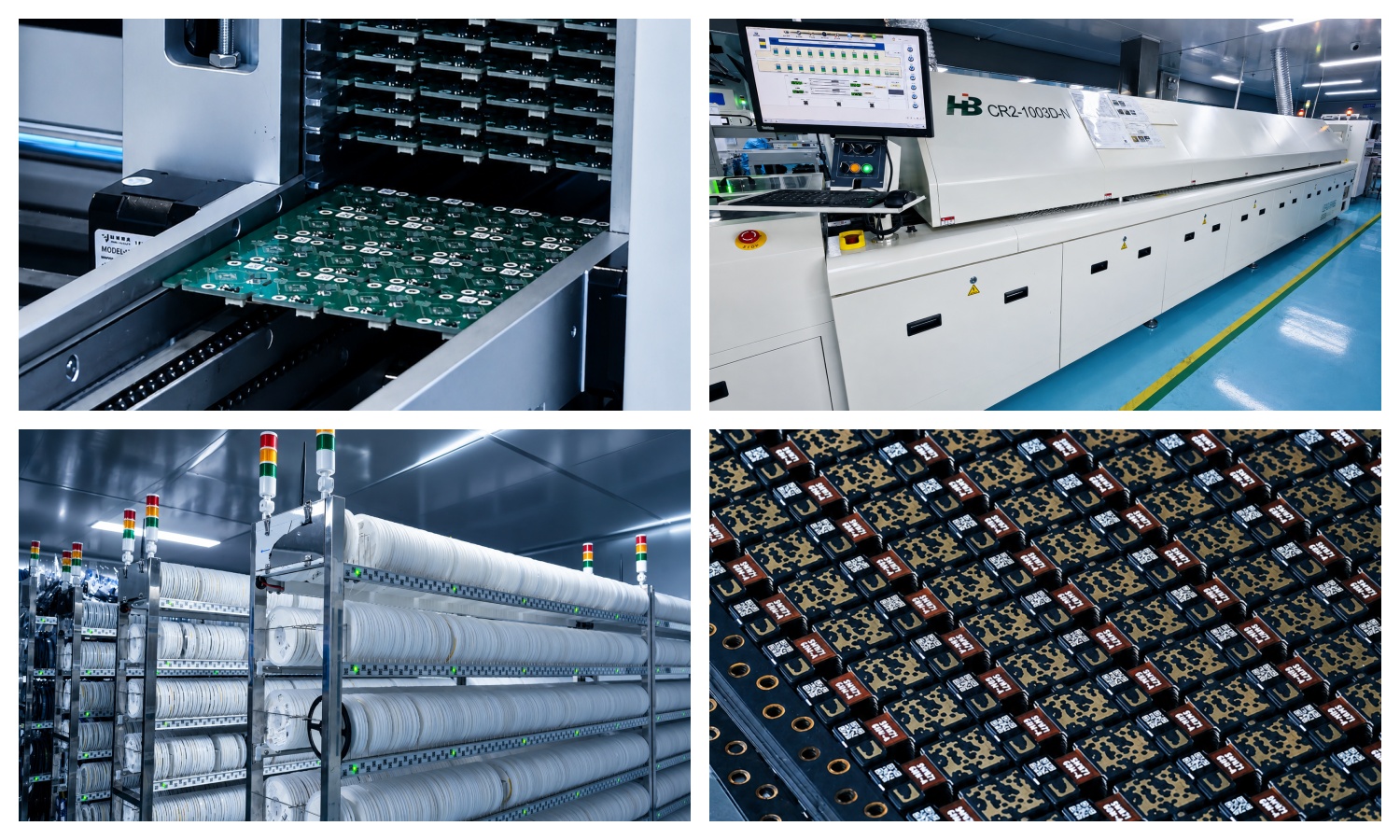
CIGACAM operates 12 SMT production lines. Core placement operations use YAMAHA equipment, supported by in-line inspection at key stages of the process.
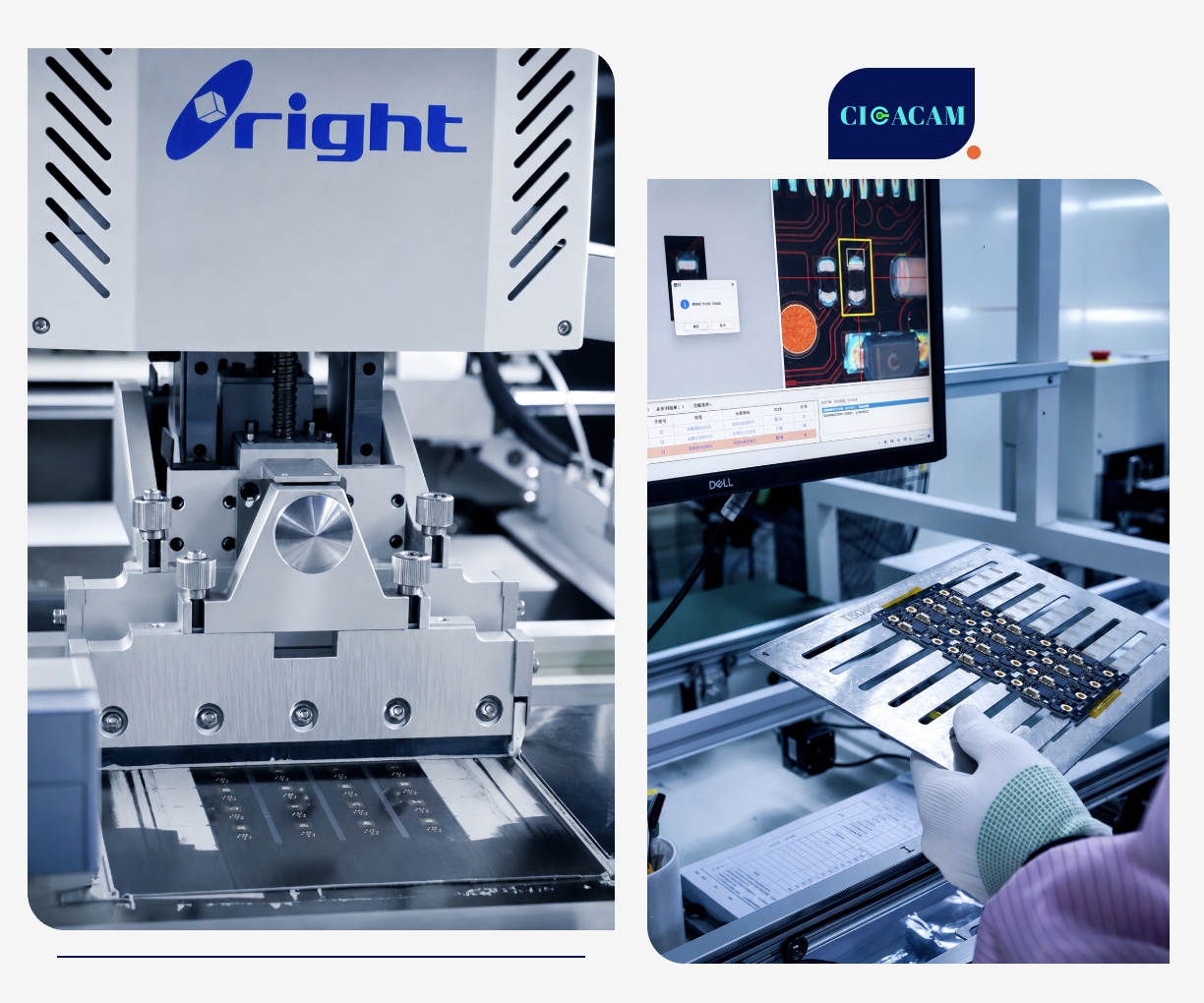
The lines integrate SAKI 3D solder paste inspection (SPI), automated optical inspection (AOI), and X-ray inspection. SPI monitors solder paste parameters such as height and volume after printing. AOI identifies placement deviations and visible soldering conditions after component mounting, while X-ray inspection supports assessment of solder joints and structures that are not readily visible by optical methods. This multi-stage inspection approach helps identify process variation within the relevant operation, before it progresses to downstream assembly.
2. Process Support for FPCs and Miniature Components
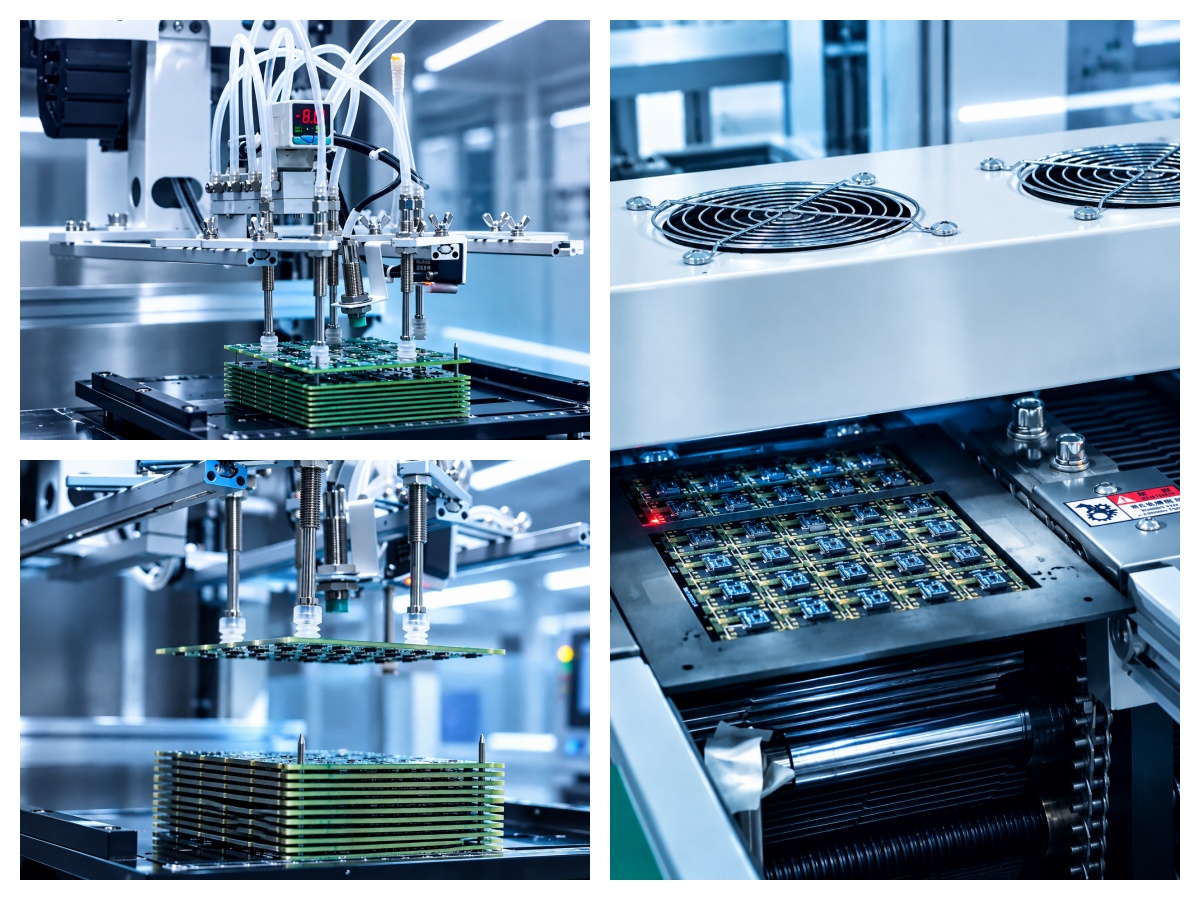
Camera modules and similar compact electronic assemblies often involve flexible printed circuits (FPCs) and miniature components. To improve handling consistency and production response, the workshop uses automated FPC loading and unloading equipment, reducing manual transfer steps during line operation.
For programs with specific soldering and reliability requirements, the facility is equipped with nitrogen generation and nitrogen reflow soldering capability. By controlling oxygen exposure during reflow, the process can support solder wetting and help reduce oxidation, particularly for fine-pitch and small solder joints.
3. MES-Based Traceability and Process Visibility
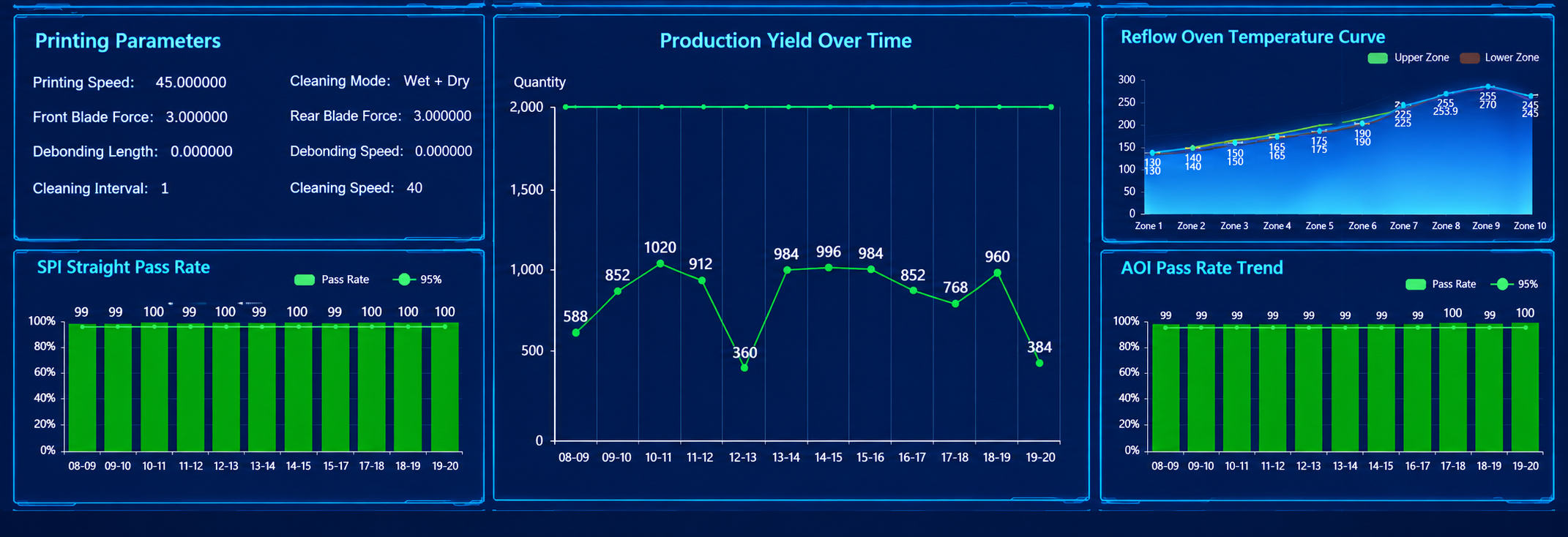
Manufacturing control extends beyond the physical line. CIGACAM uses a standardized SMT manufacturing execution system (MES) to support traceability and process-data visibility.
Line dashboards provide visibility into planned output, production attainment, and real-time SPI and AOI defect trends. The system also supports monitoring of solder paste use, auxiliary-material life cycles, and material movement by lot. When an exception occurs, engineers can use traceability records to identify the related batch and narrow the scope of investigation.
For customers developing camera modules and other reliability-sensitive electronics, process control matters throughout the journey from prototype validation to volume production. Through equipment verification, in-line inspection, and manufacturing data traceability, CIGACAM supports stable, scalable delivery for customer programs.


