

Eliminating Human Variables in Camera Module Assembly: The Engineering Logic Behind Our 8-Station Automated Production Line
In the NPI and mass production phases of smart terminal vision modules, process stability and on-time delivery are the core metrics brands use to evaluate supply chain capabilities. For precision optical components, the primary question is no longer whether a manufacturer can produce them, but whether they can deliver high volumes with consistent quality and speed.
Traditional module assembly heavily relies on the proficiency of operators for fastening and assembly. This manual approach introduces systemic risks. First, capacity has a physical ceiling, typically around 100 PCS/H. Second, prolonged manual operations inevitably lead to micro-tolerances in fastening height and dispensing volume. Furthermore, separating assembly, dispensing, curing, and testing processes increases the risk of defects during workflow transitions.
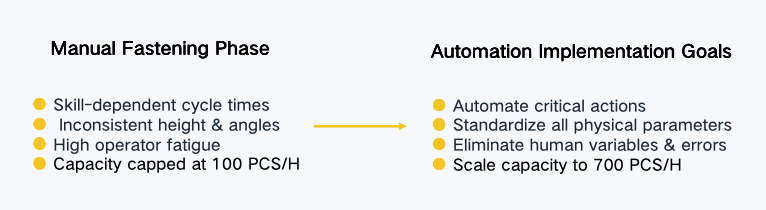
To minimize quality fluctuations caused by human intervention and ensure large-scale delivery reliability, our manufacturing center has fully implemented fully automated screwless fastening equipment. This marks a structural shift from manual control to equipment and parameter-based control in core processes.
1. Scaling Capacity for Delivery Assurance: UPH Increased to 700
When facing tight deadlines, simply adding manpower to the production line is an inefficient solution. It compromises consistency and significantly increases marginal management costs.
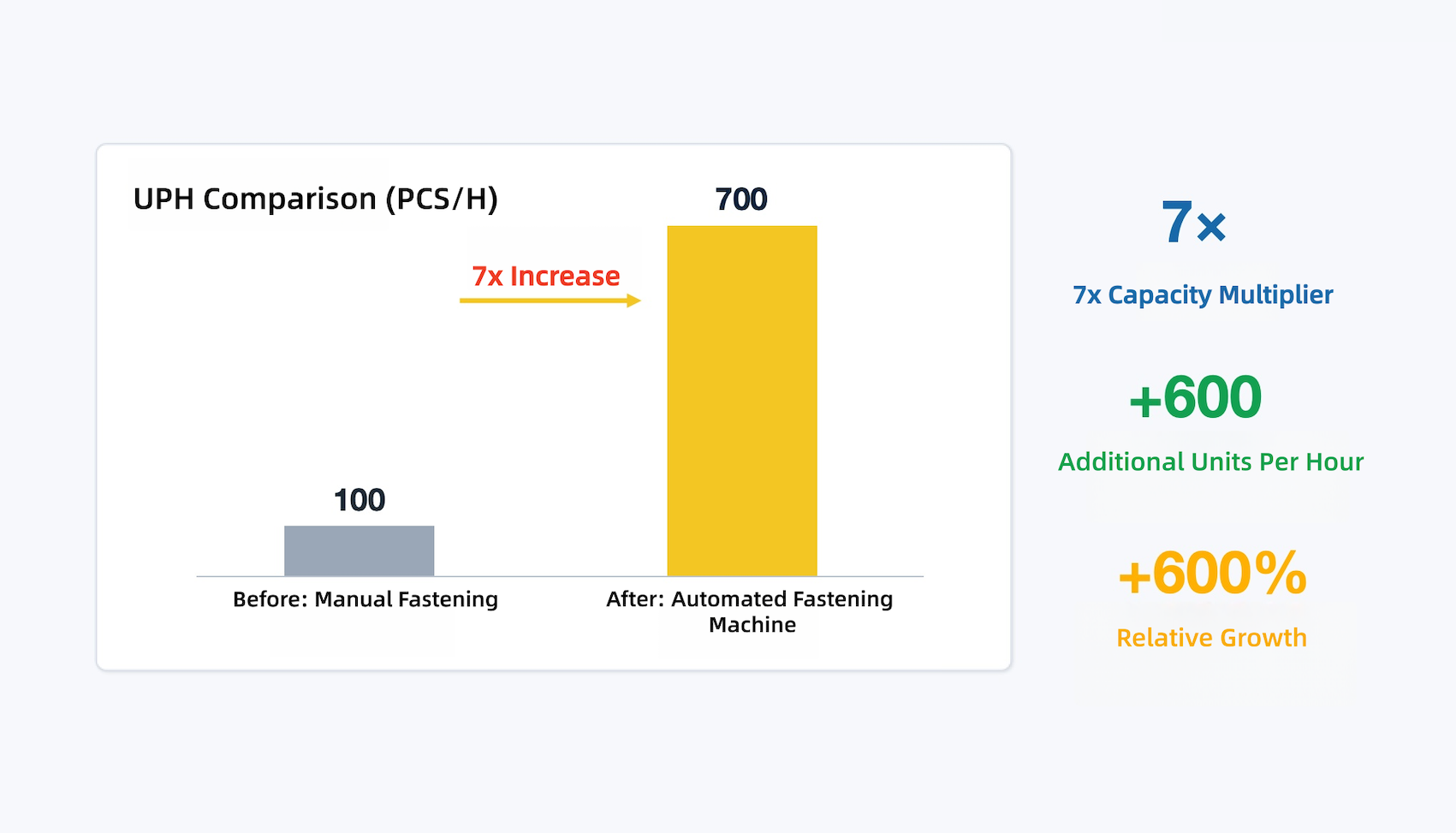
Our automated equipment utilizes synchronized dual-station operations, scaling the single-machine UPH from 100 to 700. This output is equivalent to seven skilled operators working at full capacity. During order peaks from major clients, this highly automated, flexible capacity mitigates the impact of personnel attendance variables, providing robust delivery assurance.
2. Minimizing Process Variance: Micron-Level Parameter Control
Camera modules are highly sensitive to optical axis deviation and structural tolerances. Through automated assembly, we translate manual precision into exact equipment parameters:
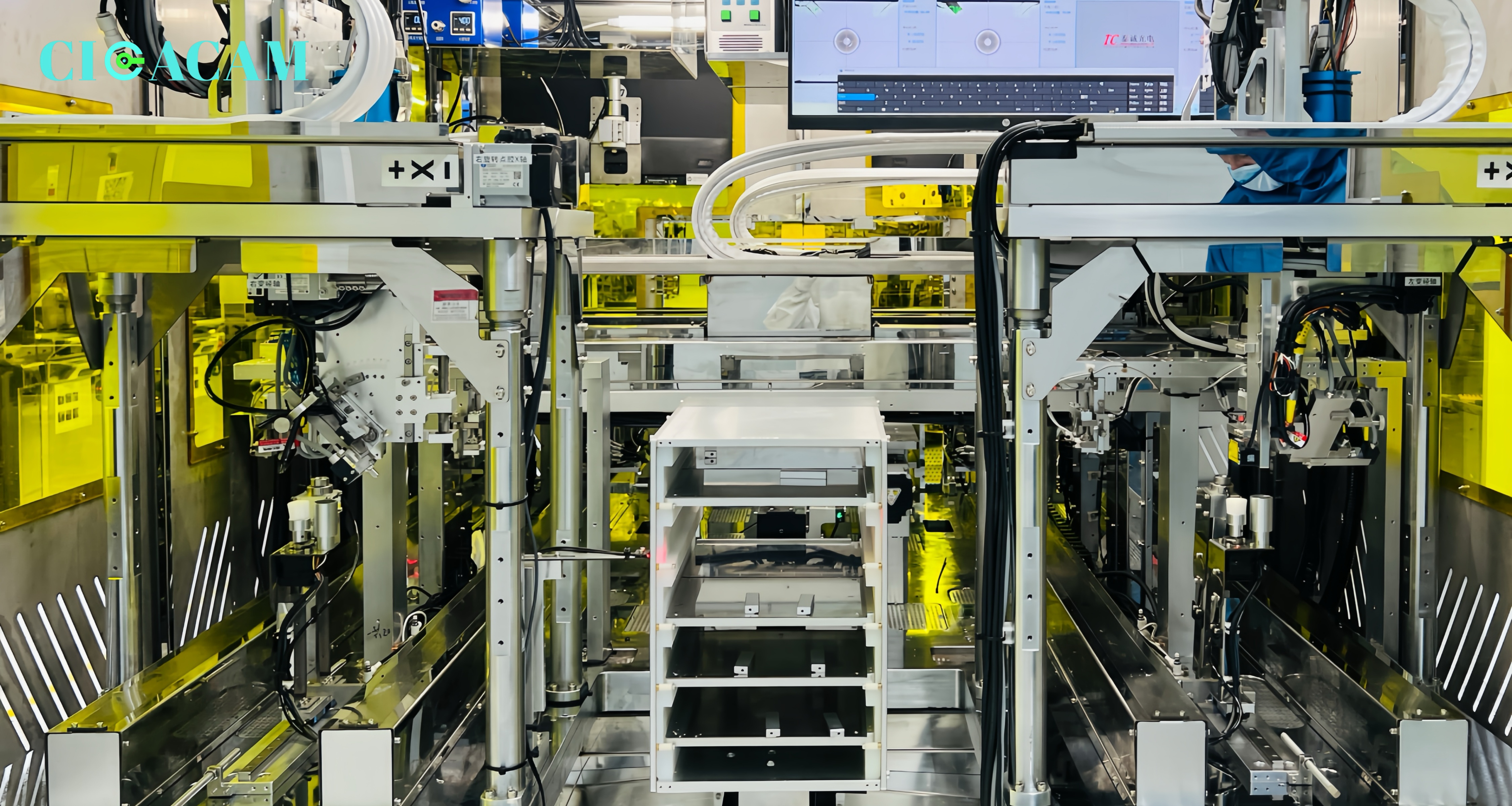
- Height and Position Control: The equipment features eight adjustable/fixed-height stations and a jig positioning system. Every insertion and fastening action is standardized in a closed-loop system, drastically reducing the risk of misalignment.
- Precise Dispensing Management: Utilizing a coordinated system of four vertical needle dispensers and two angled spray valves, we achieve exact control over micro-dispensing areas and adhesive volumes. This prevents structural issues caused by adhesive overflow or insufficiency.
3. 8-Station Process Integration: Poka-Yoke and Closed-Loop Inspection
Driving defect rates to a minimum across an entire production line requires seamless process integration.
In the traditional model, fastening, dispensing, UV curing, and continuity testing are performed at separate stations. Our new production line physically integrates these four critical nodes into a continuous, 8-station standardized workflow.
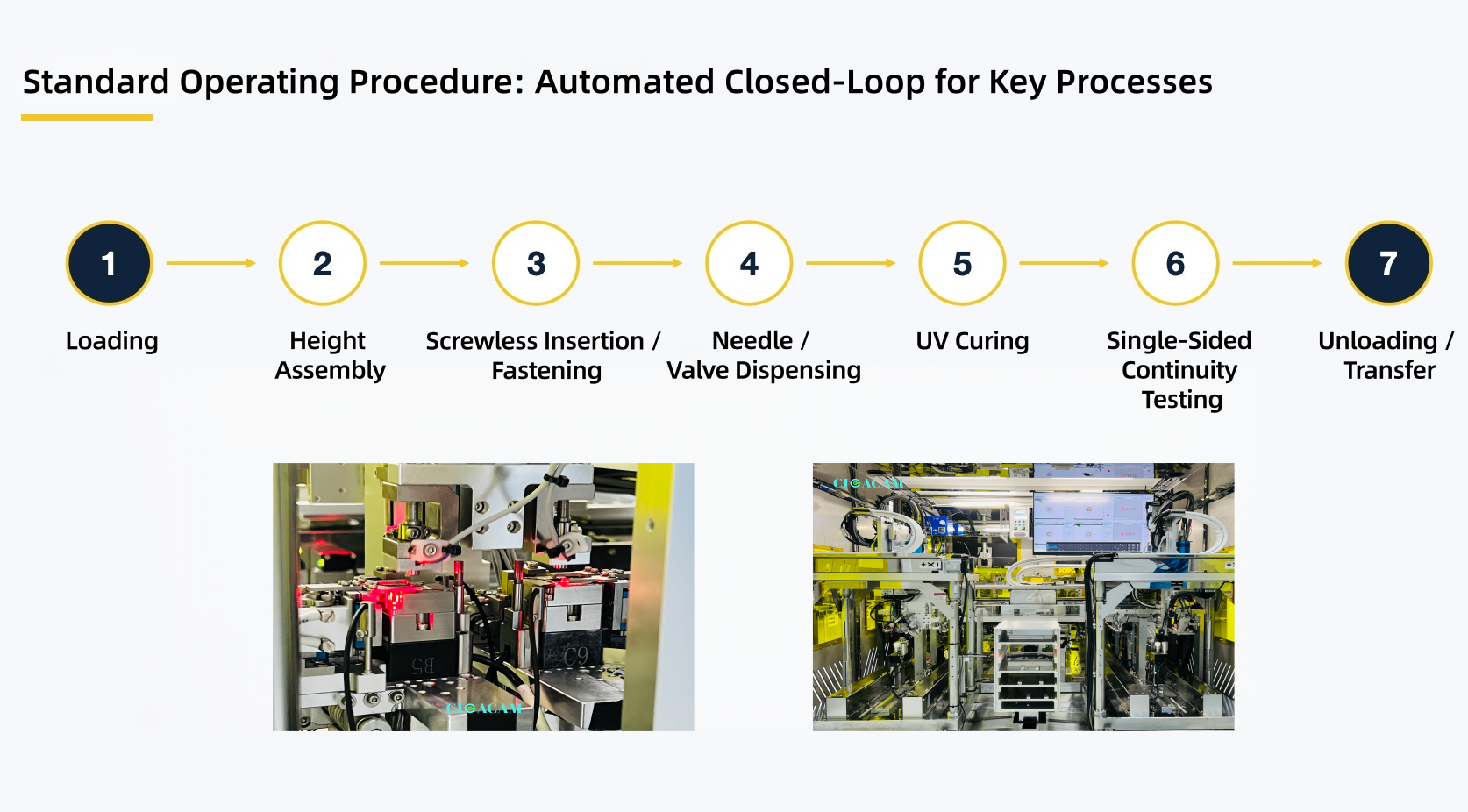
Crucially, immediately following the UV curing station, the equipment seamlessly transitions to single-sided continuity testing. If the system detects a continuity failure, missing adhesive, or UV anomaly, it triggers a Poka-Yoke mechanism and halts the line instantly. This immediate feedback loop ensures every module leaving the line meets factory standards, containing quality risks within our facility.
The true value of our automated line lies in the supply chain security it provides. Replacing unpredictable human variables with rigid parameter control translates directly into fewer RMAs, lower hidden costs, highly consistent quality, and predictable lead times for your business.
👇Partner with CIGACAM, and let your team focus on what truly matters: launching great products.


